
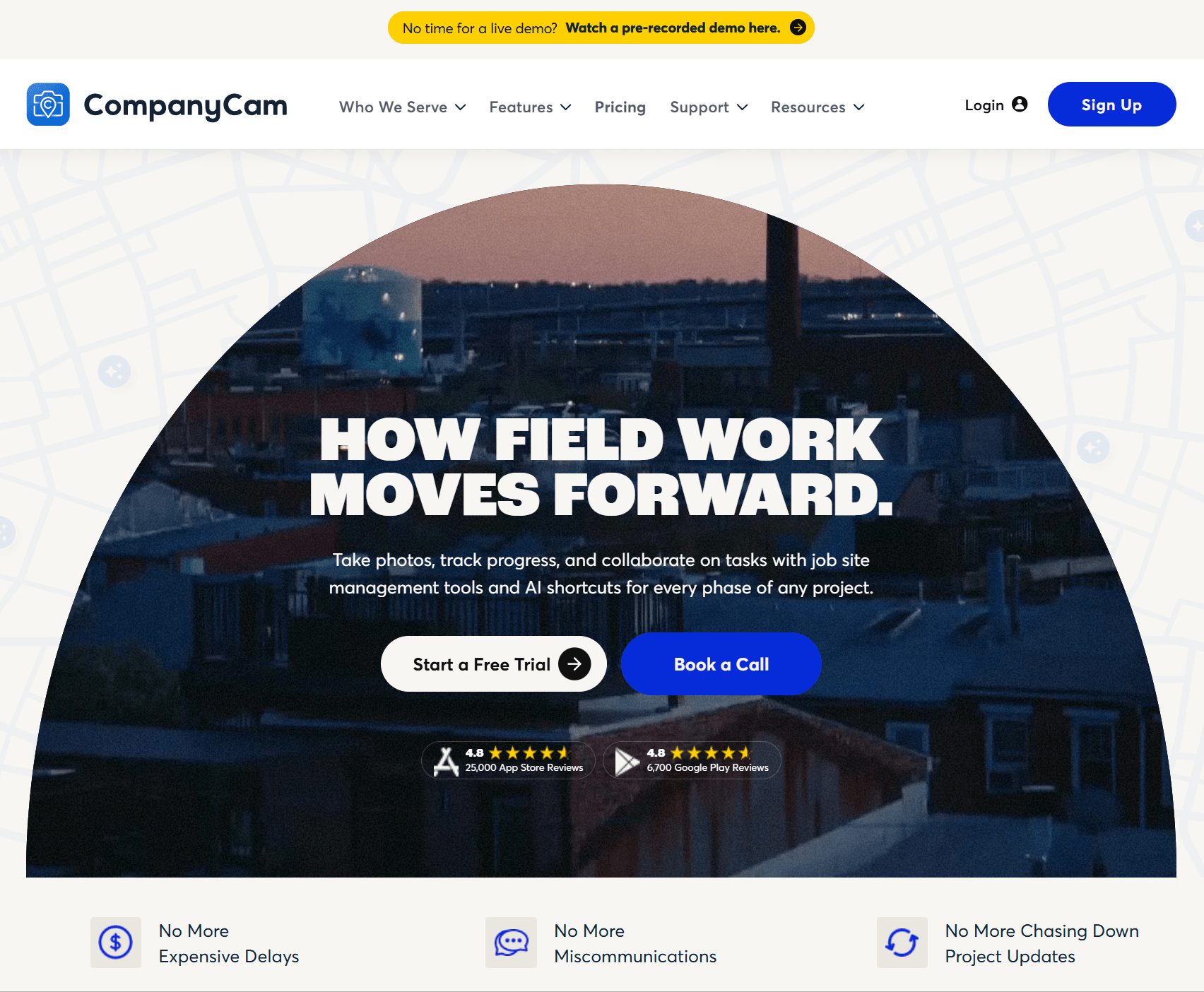
CompanyCam Brand and Design System Refresh
Building the brand and website design system simultaneously.
Translating customer research and stakeholder feedback into a clearer brand foundation and scalable website system during a four-week sprint and major leadership transition.
Pre-launch case study | 2026
Selected process work is shown here. Unreleased brand assets and confidential material will remain private until CompanyCam completes its public launch.
Project Overview
Role
Senior Manager, Design Direction, later assuming Interim Director of Brand responsibilities
Scope
Brand strategy, creative direction, customer and stakeholder research, visual identity exploration, website design-system direction, and multidisciplinary team leadership
Platforms
Figma, FigJam, Lumos, Webflow, and Craft CMS
Project phase
Research, strategy, system architecture, and early creative direction
The Leadership Transition
I joined CompanyCam in April 2026 as Senior Manager, Design Direction. In June, following an abrupt leadership transition involving both the Director of Brand and VP of Brand, I was asked to assume interim Director of Brand responsibilities and carry the company’s brand refresh and website redesign forward.
I initially reviewed the existing documentation and prior leadership’s work to understand the intended direction. With only four weeks available to establish new brand guidelines and redesign the website, I determined that the project needed a clearer plan, stronger decision points, and a system that could move forward before every creative decision was finalized.
The Challenge
CompanyCam was evolving beyond the visual identity that had supported its earlier growth.
Internal stakeholders felt the existing expression had become visually crowded and too playful for the company’s next stage. Its broad color palette, graphic treatments, illustration styles, and channel-specific executions also made it difficult to maintain a consistent brand experience.
At the same time, the website development team was migrating the company’s website from Craft 4 to Webflow. Because the new brand guidelines were still being developed, the website system had to advance without locking the team into unfinished visual decisions.
The challenge involved two connected questions:
How could we evolve the brand using evidence from customers and stakeholders?
How could we build a scalable website system before the final visual identity existed?
Auditing the Existing Brand
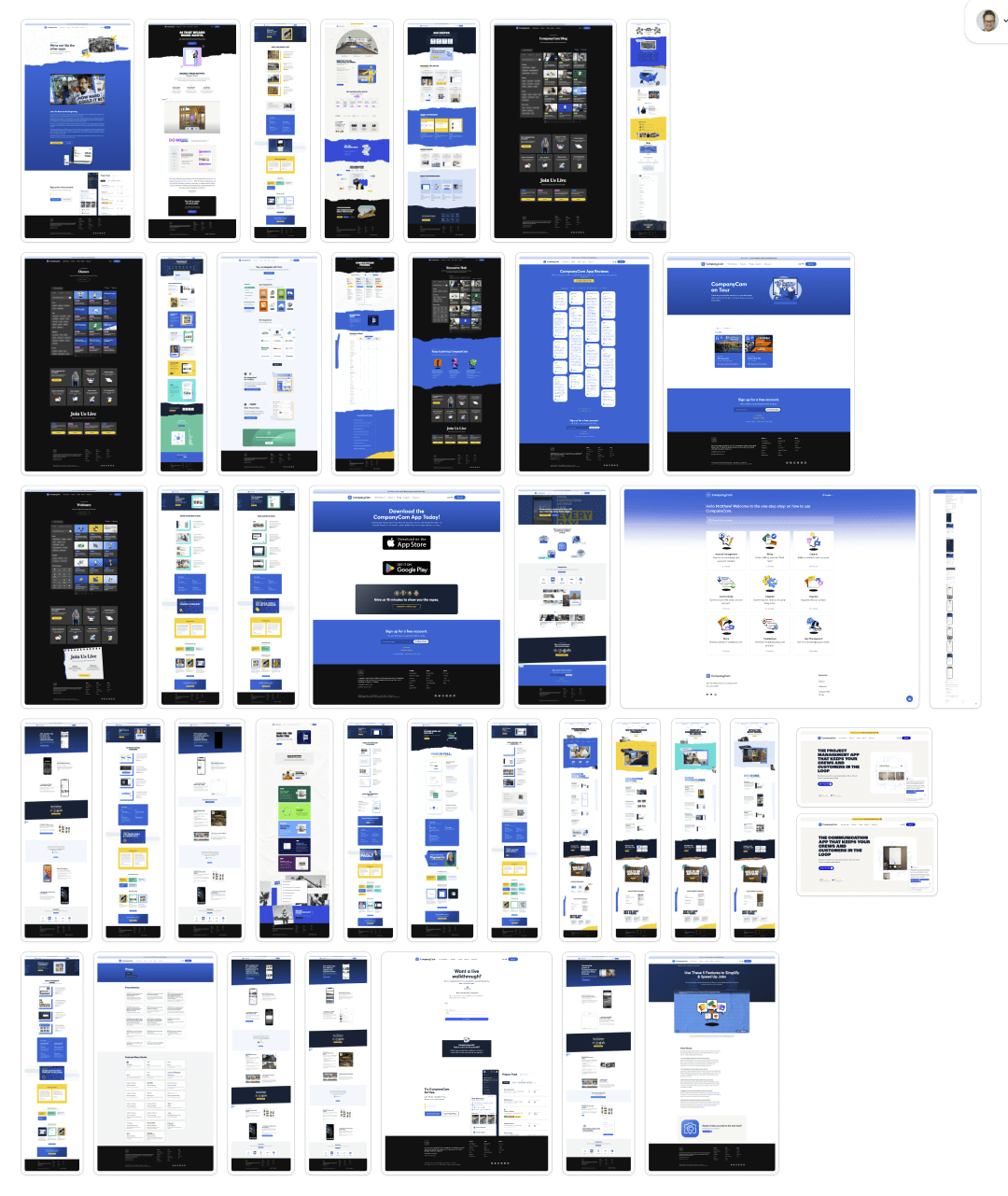
Before recommending a new direction, I conducted a broad audit of how the CompanyCam brand had evolved and how it was currently being expressed.
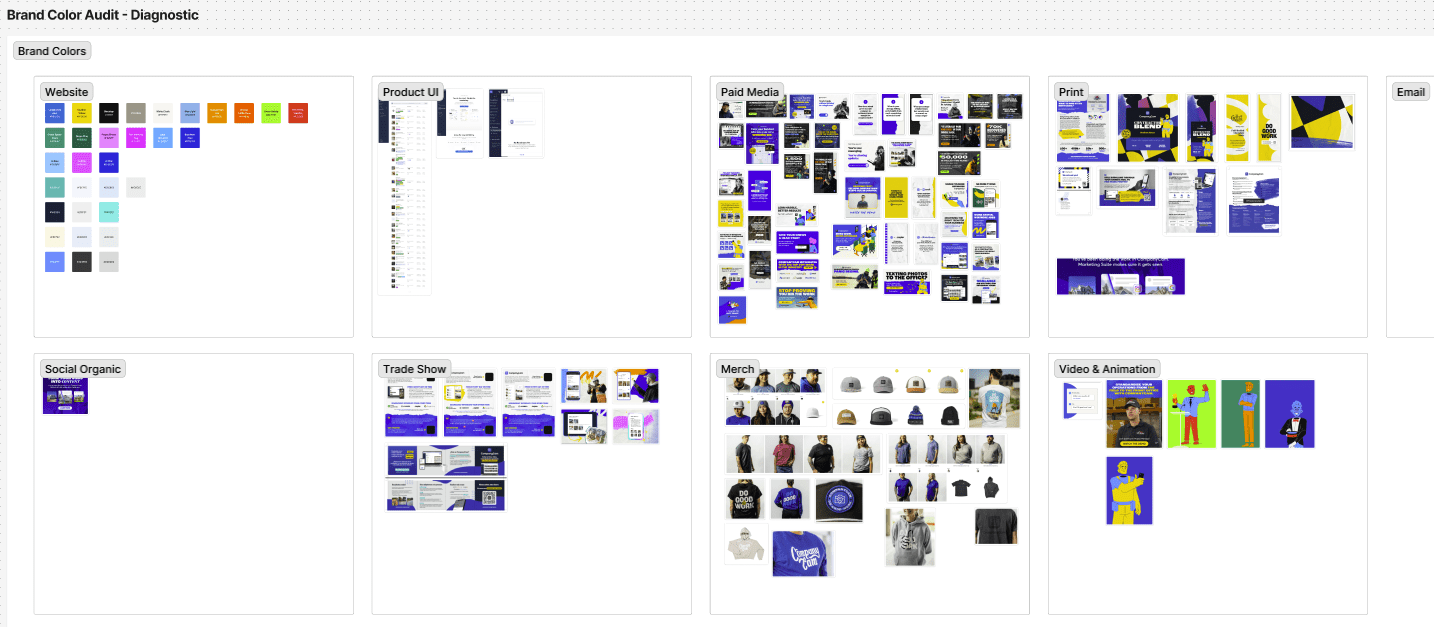
The audit covered nine major areas:
- Website
- Product interface
- Paid media
- Organic social
- Trade shows
- Merchandise
- Video and animation
I examined historical brand guidelines, current website experiences, campaign creative, product visuals, photography, illustration, typography, and color usage.
This revealed a recognizable brand with substantial equity, but also significant variation in how its visual language was being interpreted across teams and channels. The audit gave us a shared view of what should be preserved, what needed refinement, and where the system lacked sufficient guidance.
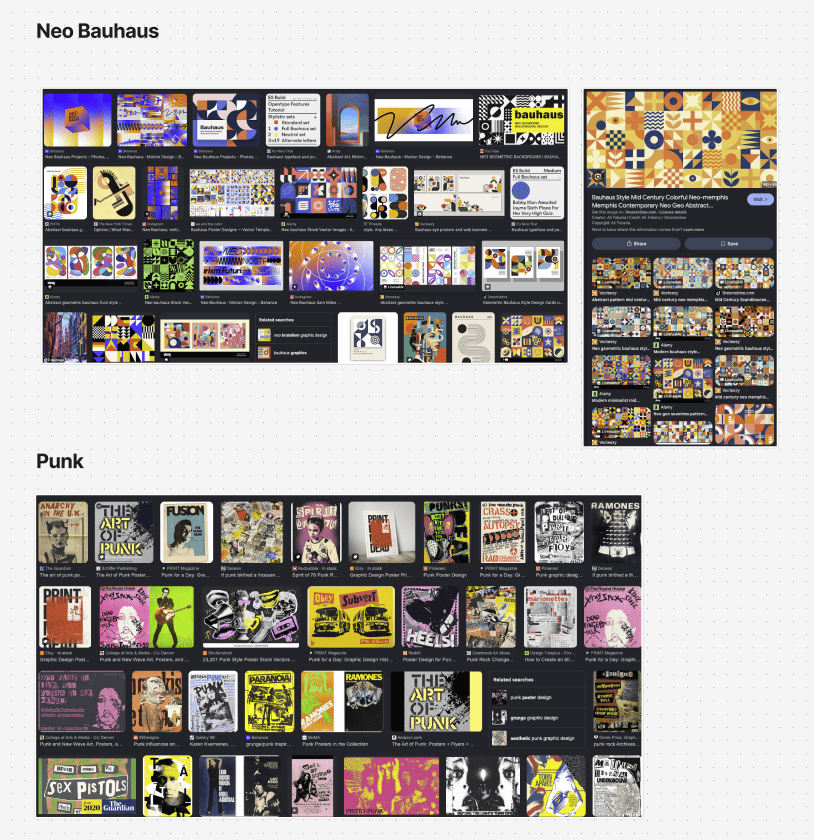
Translating Research Into Brand Direction
Customer survey findings provided direct insight into the problems contractors wanted CompanyCam to solve, while stakeholder feedback clarified how the organization needed the brand to mature.
One of the central strategic challenges was supporting two related audiences through a single brand.
Smaller owner-operated businesses often experience the problem as an immediate communication gap between the field and office. Larger organizations are more likely to frame the same problem through documentation, accountability, compliance, and operational control.
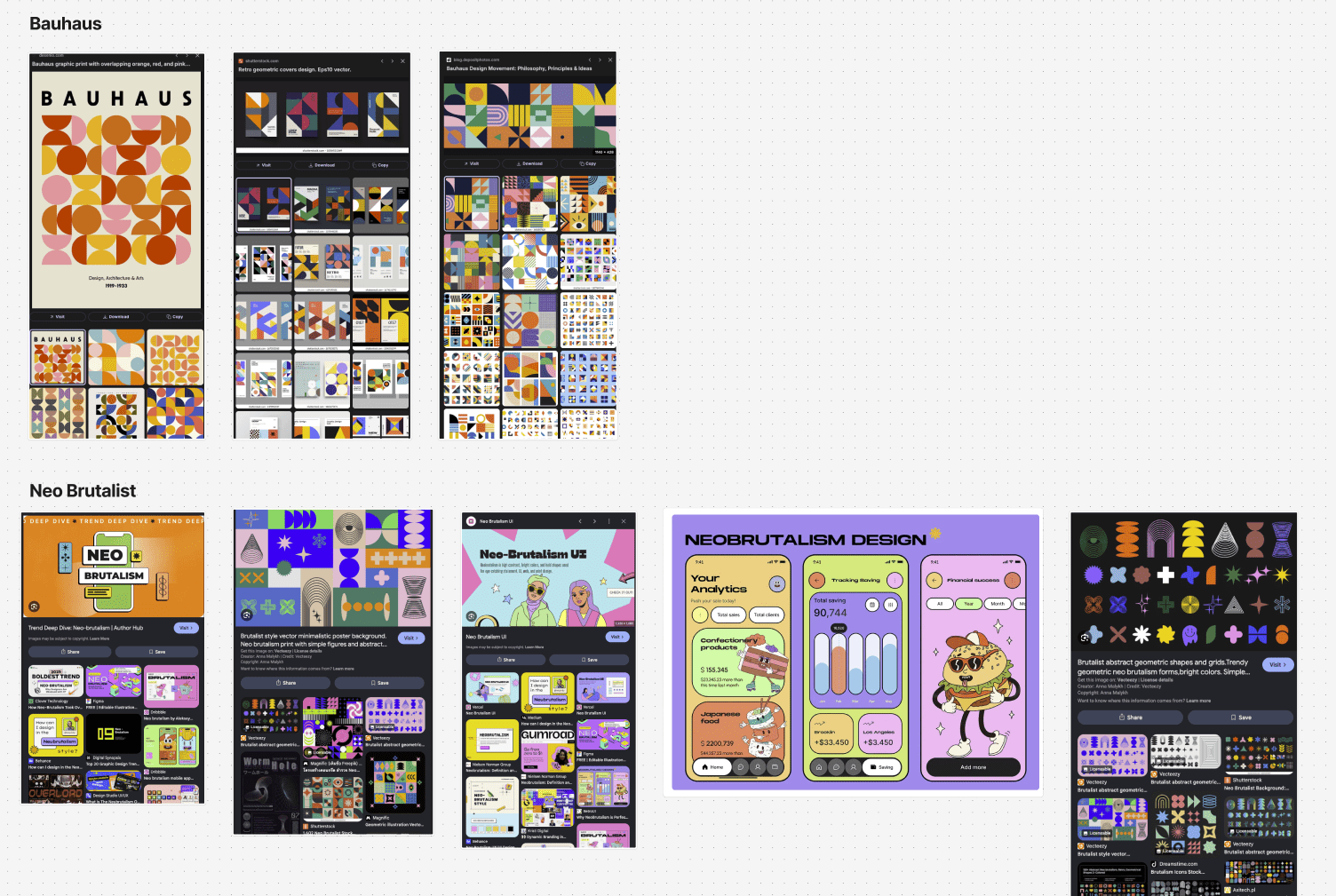
I used these insights to explore how one brand could flex across customer segments through photography, typography, messaging, and layout while maintaining a recognizable foundation.
This work informed early positioning discussions, audience frameworks, messaging direction, and the visual characteristics the next brand system needed to support.
Creating Two Parallel Workstreams
The schedule did not allow the brand team to complete every guideline before website production began. I created a parallel operating model so both initiatives could progress together.
The brand workstream focused on:
- Positioning and audience foundations
- Stakeholder alignment
- Customer research synthesis
- Creative territories
- Color and typography exploration
- Cross-channel brand behavior
The website workstream focused on:
- Craft-to-Webflow migration
- Component architecture
- Responsive layout standards
- Figma variables and naming conventions
- Semantic design tokens
- Reusable website patterns
The two workstreams shared regular decision points. As brand choices became clearer, they could be introduced into the website system without requiring the development team to rebuild completed components.
Advancing the Brand and Website in Parallel
The schedule required the brand and website teams to move simultaneously. I structured both initiatives as coordinated workstreams with shared decision points, allowing the website system to advance while the brand direction was still being evaluated and approved.
Week 1
Week 2
Week 3
Week 4
Week 5
Week 6
Brand
Research + mood boards
Exploration kickoff
Evaluate + explore
Refine + validate
Final approvals
Document + activate
Website
Lumos foundation
Finalize system foundation
Build components
Document in Webflow
Building a Brand-Agnostic Design System Foundation
We used Lumos as a technical starting point for rebuilding the website design system in Figma and Webflow.
I directed the team to separate a color’s functional role from its eventual visual value. Instead of embedding unfinished hex values throughout components, we structured the system around semantic roles such as:
- Brand primary
- Brand secondary
- Neutrals
- Backgrounds
- Text
- Borders
- Interactive states
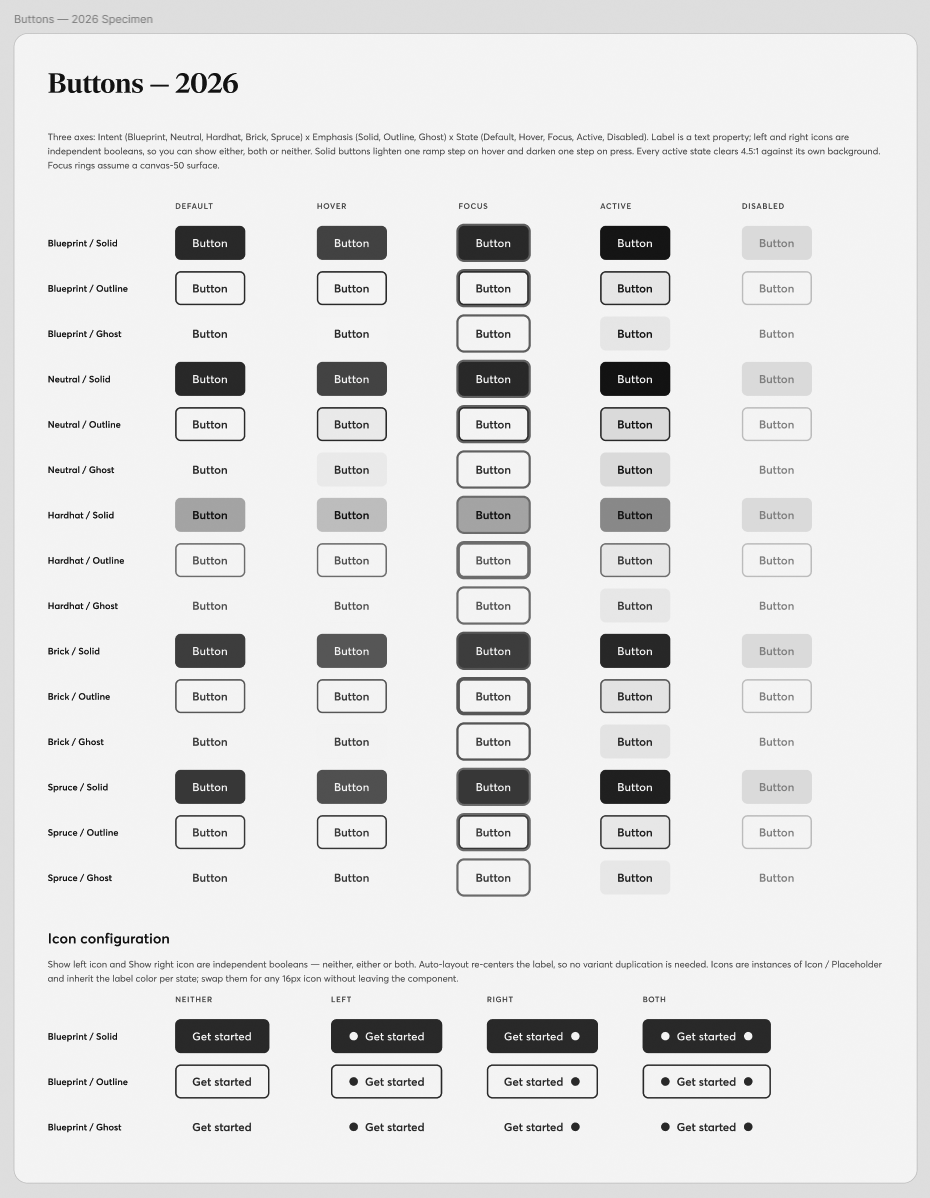
This allowed the design and development teams to build layouts and components while the final palette was still under review. Once a color direction was approved, its value could be updated at the variable level and inherited throughout the system.
Tertiary colors remained named primitives that could be introduced selectively as the broader identity took shape.
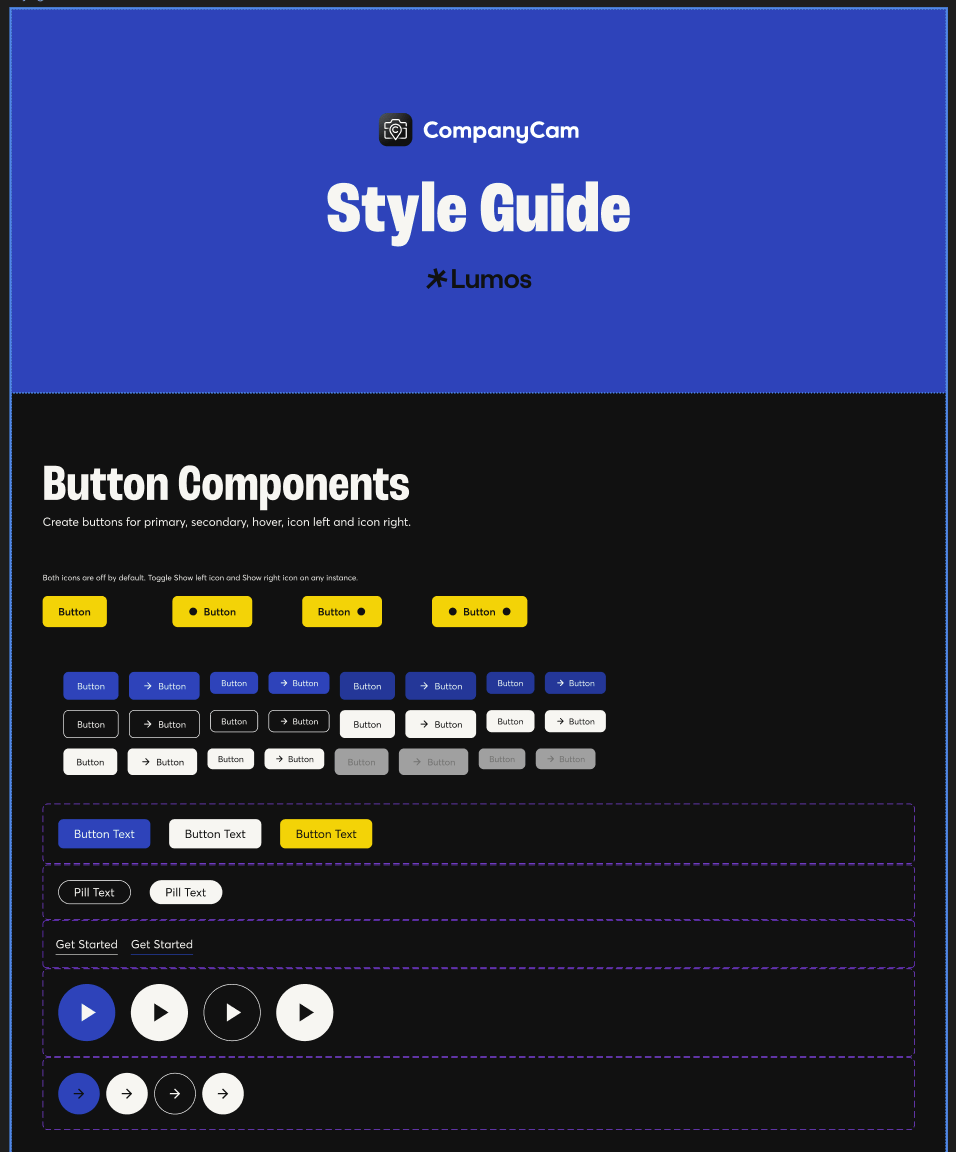
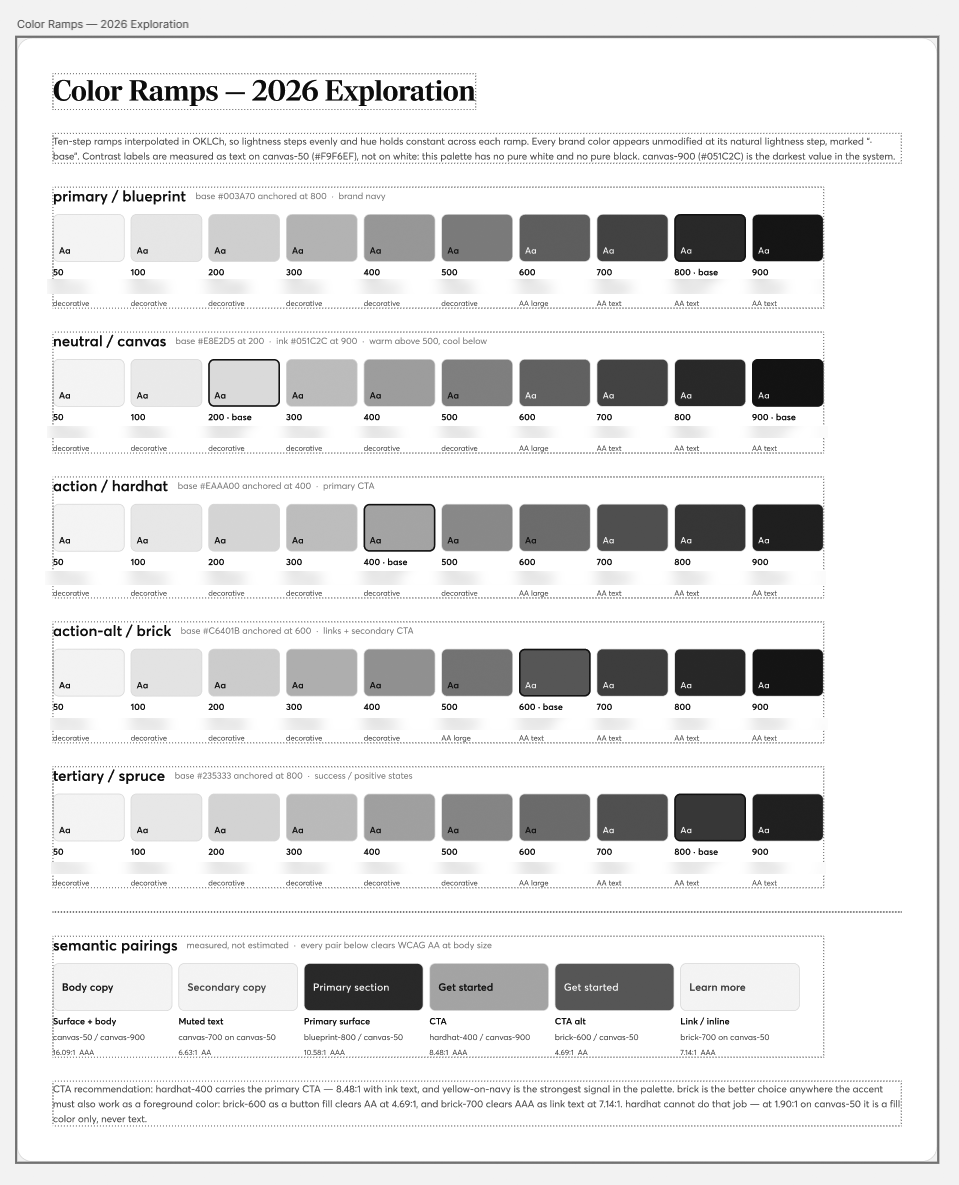
Explorations of Colors and Components
Colors have been removed to preserve non-public explorations.
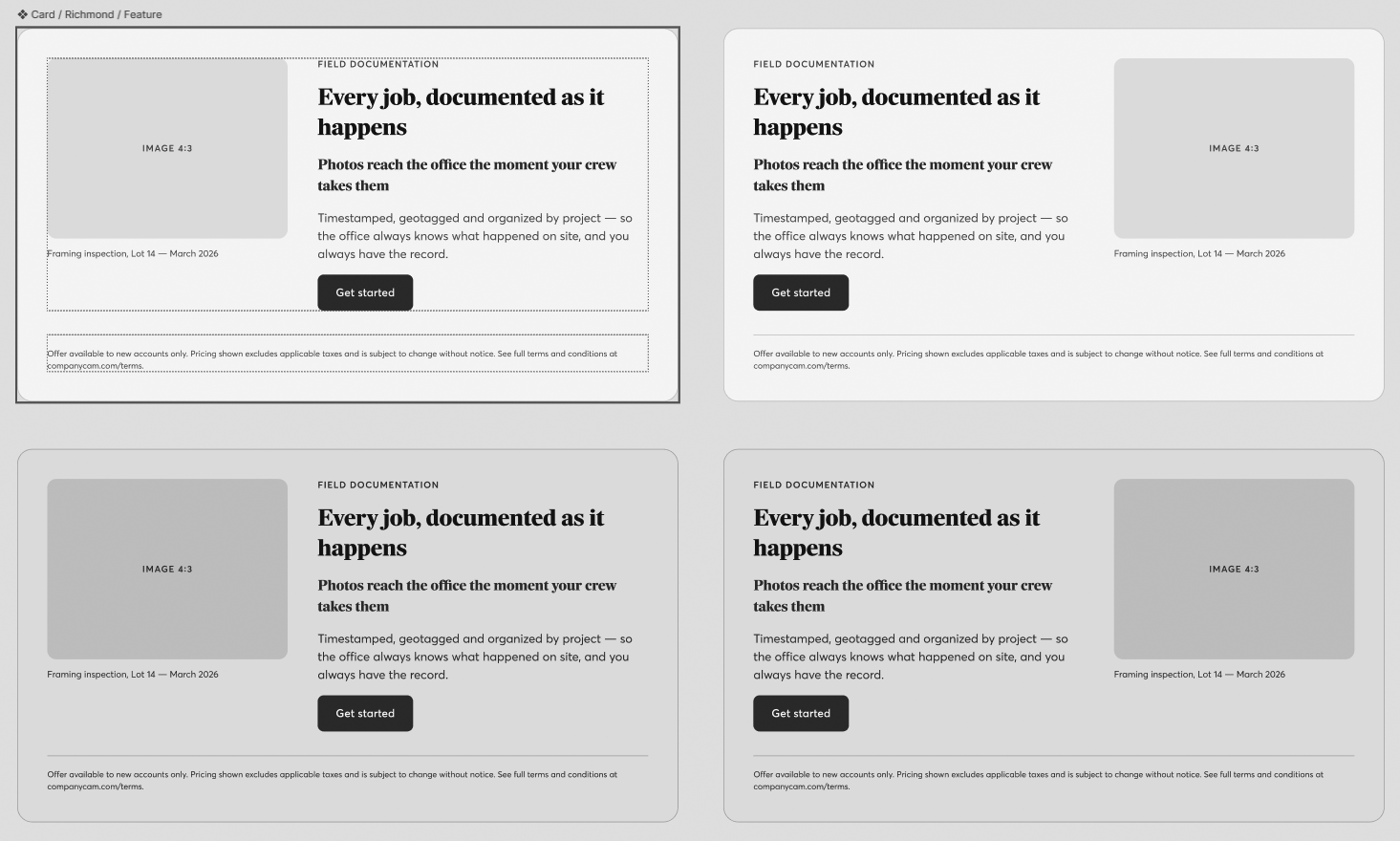
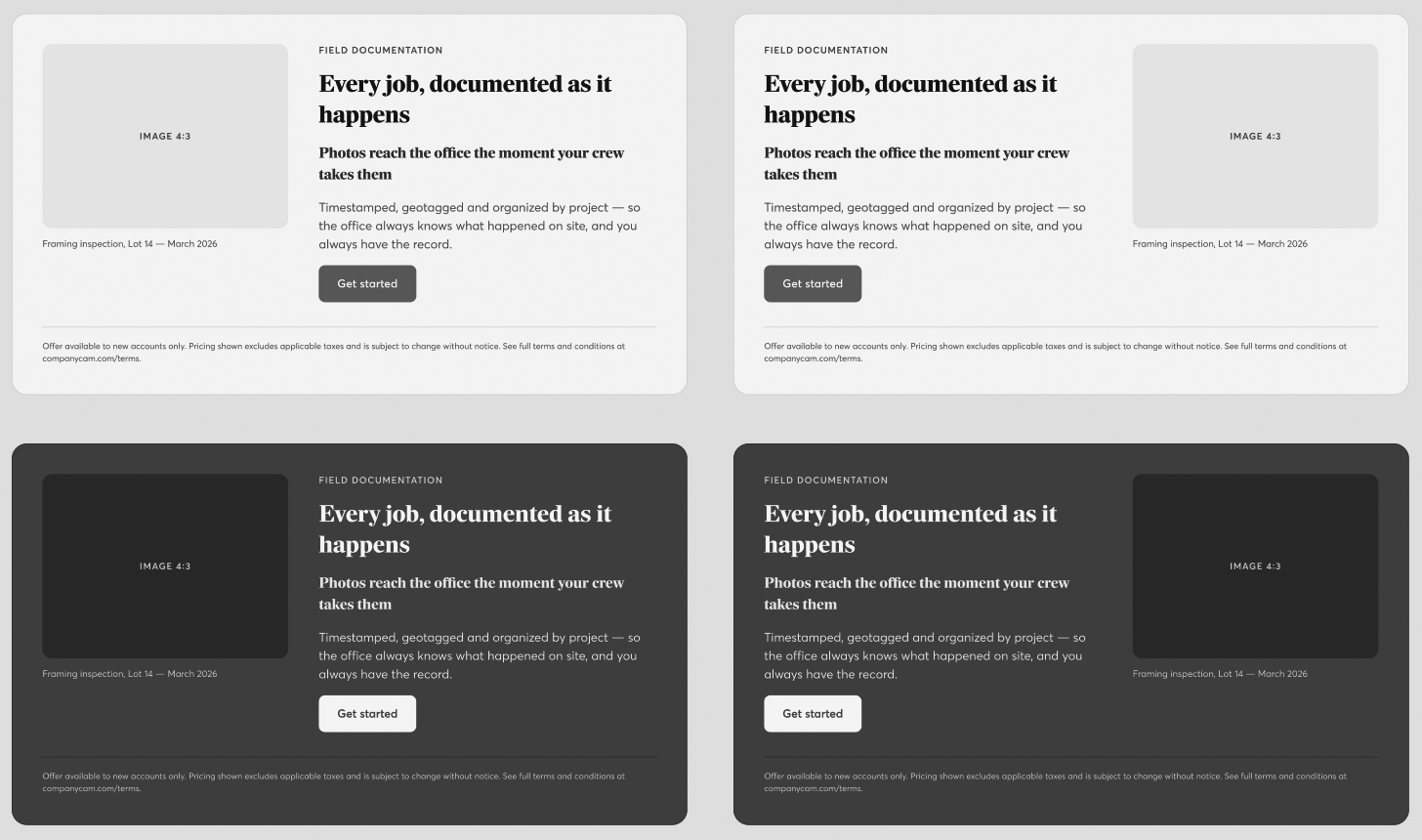
Work Completed During My Involvement
My contribution established the strategic and technical foundation for the next phase of the project, including:
- Historical and cross-channel brand audit
- Customer and stakeholder research synthesis
- Audience and positioning exploration
- Brand architecture and messaging questions
- Visual territory and typography exploration
- Cross-channel color diagnostic
- Accessible primary, neutral, and tertiary color ramps
- Semantic variable and token architecture
- Website design-system direction
- Craft-to-Webflow migration guidance
- A coordinated plan for advancing the brand and website simultaneously
Project Status
This case study documents the work completed during the research, strategy, system-architecture, and early creative-direction phases of the initiative.
CompanyCam’s refreshed brand and website were scheduled for completion in Q3 2026. My involvement concluded before launch, so the final public execution may differ from the explorations shown here. I do not attribute subsequent implementation decisions or post-launch performance to my contribution.